Category: How to Master in Trading – Advanced


The purpose of the category How to master in trading – advanced is to give experienced traders an insight into the new trading techniques. Very often they are very rarely used because they require advanced knowledge in many fields – from complex mathematical operations and calculations to the usage of high-level trading tools. Traders-Paradise’s goal is to inform about them. But not only that. The main intention is to make them familiar to all traders. No matter are they beginners or elite.

Traders-Paradise gives you an opportunity

In trading, just like it is in many fields, having advanced knowledge is an advantage per se. Thanks to our excellent analysts and experts, the most advanced techniques are available to the traders. Moreover, each of them is fully explained, with real trading examples. All complicated mathematical calculations are explained in detail. So, traders need to have on hand this valuable information and samples.

Traders-Paradise insists on quality

Concerning beginners’ already gathered knowledge, sometimes the explanation in the posts in the category How To Master Trading- Advanced will not be enough clear no matter how much we want that. Simply, to understand what our team writes here, the visitor will need to improve the skills. For them, Traders-Paradise has one simple piece of advice – visit one of our categories designed and written exclusively for the beginners.
This category – How to Master In Trading – Advanced is directed at elite traders. The impressive thing is that all posts and articles are very precise in explanation no matter how complicated the subject is. All advanced trading techniques, methods, strategies are understandable thanks to comprehensive and detailed explanations.

  • How To Avoid Bad Investment?

    How To Avoid Bad Investment?


    2 min read

    To avoid bad investment can be very tricky.

    ‘Human beings have certain innate tendencies that don’t always lead to the best investment choices,’ says Mark Riepe, senior vice president at the Schwab Center for Financial Research.

    What is a good investment? Or How to avoid bad investment?

    Both are very tricky questions. At the same time, they are quite simple if you follow a few steps. Why?
    You can see, there are always several important events happening at the same time in the global economy and the capital markets.

    Earnings reports, inflation readings, central bank decisions, trade deals, geopolitics with weighty implications.

    Altogether, these factors hold some influence over the direction of stocks and bonds. It makes sense that investors would want to consider each one closely when making an investment forecast. 

    Being analytic and detail oriented makes sense and is very positive in my opinion. If you want to avoid bad investment

    Where is the catch?

    Investors too often overemphasize the negative, more fearful or worrisome factors, while giving less consideration to the pricing power of the positive factors.

    But it’s kinda human nature to be stressed and captivated by uncertainties.

    The cryptocurrency market, for example, attracts investors into the possibility of making huge sums of money quickly, without any clear mechanism for understanding or measuring the risk of the investment.

    And other examples, 2008 financial crisis, the front page of the Wall St. Journal featured an article stating that economic decline, the collapse of the dollar, and moral degradation would lead to civil war in the United States by 2010.

    WHAT?

    That madness and hysteria surrounding the financial crisis gave many investors no choice than to take these forecasts seriously.

    When the world becomes chaotic, any prediction can make sense. But many of those predictions are bad ones.
    You can count on knowledge and experience to help you make smart decisions in most areas of life.

    Investing doesn’t always work that way.

    Even professionals in financial and market fields, often fall prey to the same unhelpful reflexes that are present among investors.

    Fortunately, you can put controls in place to help you set aside harmful impulses. In order to avoid a bad investment.

    We live in a society where many seek to keep up with the Joneses.

    Only a few individuals are resistant to the urge to make a fast dollar.

    It is highly recommended to overcome emotional and personality-driven faults.

    Yeah?

    Honestly, it’s hard to achieve, almost impossible.

    But, one of the keys to success is recognizing that a problem exists, and then devising mechanisms to control or limit bad decisions or risk.

    Investing is all about risk, but the calculated risk is important.

    The first key: avoid bad investment by avoiding confusing investments

    You are more likely to make a bad decision when you lack understanding or knowledge.

    If you just don’t understand the investment or the opportunity sounds tricky then you have to do two things: Ask more questions about it and consult with someone who has more experience than you in the field or product.
    Frankly, when you don’t understand it, don’t invest your money in it.

    Do your own independent research on any potential investment. If you someone offers you an ownership stake in a business, don’t feel pressured to make a decision right away. Demand two to three weeks to make a decision after you’ve received all the details that they can provide. Meantime, you will be able to research similar companies and be assured in your answer as to why or why not you select to invest in this business idea.

    You should diversify your investments.

    Never put all your resources into one investment.

    Don’t put all of your eggs in one basket, is an old saying.

    This rule is valid for investments. If someone recommends you put all of your money in one specific investment is giving you bad investment advice! You must spread your resources through financial products and probably some real estate.

    You have to find a competent investment advisor.

    Make sure that you seek professional help from someone who is educated in the field you’re looking to invest in.

    Don’t take financial advice from someone who isn’t a financial professional.

    The advisor is skilled to analyze a business idea and financial instruments.  An advisor can review fund and stock history. And can give you guidance on the possible projection of the investment, based on market indicators. They can properly explain to you how to avoid a bad investment.

    Bad investment decisions can devastate all your investment, all your capital.

    Don’t be rush or make a quick decision. Investing is a smart and methodical process that cannot be made in a hurry.

    You must take your time and evaluate before making any investment decision to avoid a bad investment.

    A wise man once told, “Measure twice and cut once.”

    Risk Disclosure (read carefully!)

  • Good And Bad Investment

    Good And Bad Investment

    2 min read


    When you work hard to earn money and you earned a surplus that you can invest, you want to make sure it isn’t going to disappear on you. Take your time to carefully understand an investment prior to putting your money into it. It is a very important concept. 

    Sometimes it’s better to miss out on a great investment than it is to be involved in a bad one.

    Of course, there are good and bad investments, but the question is how to tell if something is a good or bad investment.

    The act of accumulating and investing wealth is a dangerous proposition.

    The hardest part of the process isn’t picking the right investments, but rather, guarding our hearts from the greed of money.
    We need to always be aware of the desires and possibilities, especially when money is involved.

    While supposedly ”market-beating” brokers and advisors tend to profit in all market conditions. On the other side, we have the performance of the typical investor over the past 20 years. But we can precisely describe them as shockingly poor.

    There is a lot of confusion surrounding investments, but truth is that investment is anything that you can buy and hold on to in order to gain value.

    Literally, the investment can be anything you can buy and sell.

    The key is to realize there is no such thing as a naturally good or bad investment.

    What I mean is if you make right timing, you can be wrong about valuation and strategy, and still come out with a profit.
    Or if your valuation is strong, you can be wrong about timing and strategy and still come out with a profit. You may have a

    positive expectation with good risk management. In other words, your strategy is good.

    But your profit is assured over time even though any single investment can fail on timing and valuation.

    Successful investing is all in the process: risk management, strategy, and timing. It takes work and effort.

    There is no one-stop solution. There is no magic pill. If you’re looking for instant solution and asking what is a good investment, your thinking is in the wrong direction.


    Everything, but literally everything can be a bad or good investment, depending on the moment you enter, the strategy, the trading plan, investment plan.

    For someone who is trying to identify solid investment opportunities from among various available choices, it would be helpful if you are able to identify financial opportunities as distinctively good or bad.

    However, it’s not always a black-and-white task.

    Some of the processes depend on your own good perception. There are some red marks that forewarn of a potential losing bet. However, as well as some positive signs that could lead to a profitable investment.

    The average investor’s investments underperformed the returns of almost every asset class. Part of the reason for this is the tendency of investors to buy high and sell low.

    In times of market volatility, many investors panic and dump their stocks. They often make poor investment choices. They are seduced by the promise of high returns from investment products. That is difficult to understand and hampered with high fees.

    A good investment is one that meets your goals and objectives.

    A bad investment is one that doesn’t meet your goals and objectives.

    To find good investments you must have an understanding of what is realistic. What kind of return should you expect on an investment? If you have a good sense of what is and is not possible you are less likely to get scammed.

    You must be able to keep your eye on your chosen investment, and this is something that can be hard to do. Not all investments are easy to track in this way. The best thing to do is to make sure that your focus is primarily on material assets, as these are the kinds of things you can easily see, and they are more likely to be easily tracked too. As long as you can keep an eye on your investments, you can be sure that you are doing with it what you should be doing in order to make money.

    I presented you a few essential rules you can use to avoid bad investments and recognize good.

    Those are not must-follow rules. You can think of them more as guidelines. Especially if you’re a new investor, using these rules to stay away from bad investments can help you to make better choices.
    And never look for the big, fast wins. You’ll be crushed.

    Risk Disclosure (read carefully!)


  • Stock Market Is Going To Crash? Where Could You Put Your Money?

    Stock Market Is Going To Crash? Where Could You Put Your Money?

    Do you believe that the market will crash or you know? There is a big difference between what you believe and what you know.

    2 min read

    market crash

    Market crash or market not crash. If you truly believe the market is going to crash, there are a lot of sorts of places where you can put your money.

    You could buy gold or real estate or you could take an aggressive approach. And try to capitalize on stocks’  by loading up on investments designed to rise when the market falls or you could move it all into cash.
    But be honest.

    Do you really believe in such a scenario? Market, crash!

    There is a big difference between what you believe and what you know. Do you know that the market crash is close? When? Tomorrow? Next week?

    On the other hand, I can understand that someone can recognize market crash in this uproaring and uncertain times.

    We all remember, OK most of us, March 2009 and market crash.

    Everyone was extremely agitated about the falls in the stock market. And people were feared that the stock market might continue falling. Many people wanted to sell the holdings in his investment portfolio, move the proceeds to cash and sit out the market turbulence.

    And you know that emotions have an important influence on investor behavior and how do they make decisions.

    This can often lead to investors failing to capture the returns that are there for the taking. And as a result, suffering poor financial outcomes and according to some research, we are twice as sensitive to financial losses as we are to making gains.

    But is it so today?

    Is this the same situation? Will the market crash? Or it may not be. Think about it.

    The ones who like to predict disasters pointed to any numbers of reasons why they believe the market is headed to a crash.

    You have the choice to pick. From the growth-slowdown scare in China that sent stock prices down 12% in the summer of 2015; Brexit and the election of Donald Trump. Anything is supposed to be catalysts for a market rout. Obviously, some prediction of the market’s downfall is going to turn out to be right. But after the turnaround began in March 2009, it’s not as if investors knew the bear had run its course.

    While we believe we know where stocks are headed, we actually don’t.

    The same goes for market pros who may speculate and prognosticate (sometimes even provide valuable insights into what’s driving the market). 

    But they don’t really know what the financial markets are going to do in the near term. They don’t know will the market crash. 

    I don’t think it makes sense to shift your money around in an attempt to outguess the markets, whether that means going to cash to avoid a setback or moving to an investment you think will thrive while the market drop.
    That doesn’t mean you should sit back and do nothing.

    You can do the following things:

    The most important thing you want to confirm is your asset allocation or the percentage of your holdings that are invested in stocks.

    That will determine how your portfolio holds up if the market takes a major dive.

    Take this time to go over your holdings and tally up how much you have in stocks and how much in bonds and you’ll see how your portfolio is divided up between stocks, bonds, and cash.

    Second, figure out where your asset allocation should be.

    I’m sure you want a blend of stocks and bonds that will generate high enough returns so you can reach your financial goals but at the same time isn’t so risky that you’ll sell stocks in a panic during a major stock rout.

    Think back about how you handled past downturns or how you reacted when stocks began to dip and dive. You want to come as close as you can to a blend of stocks and bonds that you’ll be okay holding in a variety of market conditions. And then make all necessary adjustments.

    Then you feel you’ve got a portfolio that will provide sufficient gains during rising markets and enough protection during routes.

    You’ll be able to hang on until the eventual recovery, regardless of what’s going on in the market. The idea is to make sure your portfolio doesn’t become too aggressive during market upswings. Or too conservative when stocks take a hit.

    Making dramatic changes such as fleeing to cash or switching to different investments altogether, may be challenging at times when every news story or TV show you see seems to suggest that the market is on the edge of Armageddon.

    But you don’t want to let fear and emotions dictate your investing strategy and lead you to make impulsive decisions.

    Can I guarantee that this approach can provide you with the best results during the long – term? Of course not.
    This is just another  ”what would be if it were” scenario.

    Risk Disclosure (read carefully!)


  • Broker and You! Fighting or cooperating?

    Broker and You! Fighting or cooperating?

    Broker and You! Fighting or cooperating?
    The broker is known as a market maker and market maker takes the other side of your trade.

    By Gorica Gligorijevic

    Broker and you, what a nice relationship! Okay, you think your Forex broker is on your side. Nice! Wonderful! I’m excited! You have it! You found the best!

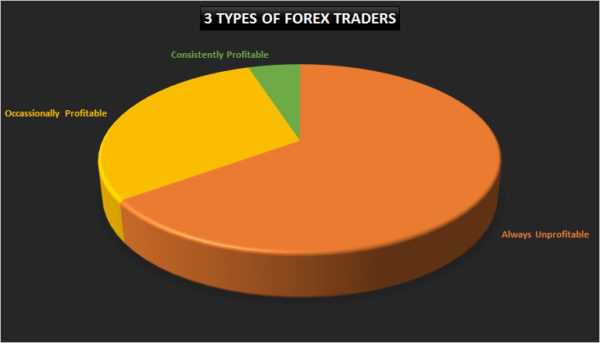
    But, are you sure that your broker wants especially you to be the winner? At the same time, 95% of Forex traders lose. And you have special status? Really?

    Do you really think your broker has built his business on the minority 5% who win? C’mon! Don’t be silly!

    Whether you’re already in the 5% elite (congrats) or working your way to it, you must know these three things. It can make the difference between long-term successes or Forex failure.

    How does your broker see you? 

    Really, what does he think about you? Actually, from your broker’s point of view, .you are an “A” group or a “B” group.

    The broker is not emotional. He has numbers and percentages in front of him.

    One group traders make up the 95% who constantly lose and the other traders are people who have been consistently profitable or more than 3 months.

    Group A, group B. 95% or 5%. Nothing else. If you are a newcomer, the broker will automatically add you to the “A” group until you prove otherwise.

    But, WHY?

    You have done nothing to be there, you are beginner!!! You just opened all of this for your first time!

    The answer is simple, your broker knows that 95% of new traders will lose, so he’s 95% sure he’s put you in the right group.
    Well, he isn’t sure 100%, notice that! If you lose, he wins. Only that matters!

    Forex brokers are known as market makers and market maker takes the other side of your trade. Never forget that someone somewhere is holding the other side of your trade.

    Let’s say you decide you sell 1 standard lot of EUR/USD. Now for you to take that trade, someone else has to buy 1 standard lot of EUR/USD. Right?  In other words, there always has to be a buyer and a seller for a trade to take place.

    If your broker is a market maker, he’s holding the other side. In other words, if you win, he loses.

    Simple? Yeah!

    But a bit unpleasant. Brokers make most of their money betting on the fact that you are going to lose. This is the conflict of interest 1/1!

    Honestly and fortunately, the majority of brokers don’t take the other side of your trades.

    Instead, they pass them on to other traders, acting more along the lines of what you had in your mind that a ‘broker’ is. Most of them simply connect buyers and sellers and take a commission on facilitating the trade.

    Your broker, your true and professional broker, will never take the other side of the trade, and he will never bet against you as a client. This secret has been revealed! Share with others!

    And be cautious, it never can be too much.

  • The Dangers of Emotional Trading And How to Avoid That

    The Dangers of Emotional Trading And How to Avoid That

    2 min read


    Trading is less a business and more psychology from which your success or vice versa on Forex market depends. Even if you have decided to switch to systematic trading, this does not diminish completely the dangers of emotional trading and emotional pressure when you are deciding a trade.

    Often, Forex traders have the belief that only a complete absence of emotions can help during trading. Still, fear, uncertainty, greed, hope, faith, regret, and happiness inevitably follow the process of trade and may cause the dangers of emotional trading.

    Combating emotions at the moment when your feelings overwhelm, means ignoring the sixth sense, intuition, and finally insight. And what happens? You have brain fog!

    Why? It is known that emotions also transmit the flow of information to us. We are guided by this information, we behave under their influence. But this is given to us to control our emotions and to replace one’s feelings with others.

    There are many ways to control emotions and avoid the dangers of emotional trading:

    First, it is possible to change your emotions by concentrating on another object. As a rule, this method is very effective. The thing that attracts our attention becomes real for us. You can consider the suffering of losses, or vice versa, examine the possibility of making a profit.

    Second, by changing your views and beliefs you can change your emotions. Every belief we gain over our lives is, in a way, a filter for us, which is affecting the knowledge of all information. All points of view accumulated throughout life have an impact on the interpretations we receive in our mind.

    Finally, the third way to change your emotions is by modifying physiology. Change in breathing, mimics, body position, color and speed of our voice, all this has a direct impact on the emotional part of not only Forex traders, but any person.

    Concentrate attention to avoid the dangers of emotional trading

    The concentration of attention is one of the most important components of our emotional state. The fact that you are focused on the Forex trading process becomes not only the subject of reality but also the acceptance of the facts. All activities influence the interpretation of events and therefore affect our emotions. All this guides our behavior, and decisions get an emotional connotation. In this case, it is necessary to define the priorities: what are you waiting for? Do you think about the possibility of losing? Or expect a profit?

    Those who see only losses are likely to hesitate to invest in the market for too long and may even miss the transaction. But once they decide to enter the market, they quickly earn profits. Trading is an attempt to balance the contradictions. The trader should focus on profit and loss and try to balance them. The trader should focus on the likelihood of his/her methods and information provided by the market because they are the only ones that are correct and reliable.

    Physiology and the dangers of emotional trading

    It has been proven that our body manages our emotions and that emotions influence our thoughts. The easiest and most effective way to change your emotional state is to change your physiology – speed, and depth of breathing, voice or even your pose.

    Pay attention to your attitude, how you sit, breathe, and whether the muscles of your face, shoulder, or whole-body tense. If you feel sick, you should sit more comfortable. Fully simple physiological manipulation can be an effective way of controlling your feelings.

    Control your emotions, this will definitely make you a more successful trader!

    Understanding Fear

    When a trader gets bad news about a certain stock or the general market, it’s normal for the trader to get apprehensive. But at the same time, you must be clever, you must avoid the dangers of emotional trading.
    The dangers of emotional trading
    You need to understand what fear is: a natural reaction to what they perceive as a threat. In the case of traders, to their profit or money-making potential. Quantifying the fear might help. But you as a trader should consider pondering what you are afraid of, and why you are afraid of it.

    Yeah, I know! This is not easy, and you need practice, but it’s necessary for the health of an investor’s portfolio.

    Greed Is Worst Enemy

    “Pigs get slaughtered.” is an old saying on Wall Street.

    This means that greedy investors are hanging on to winning positions too long, trying to get every last tick. Greed can be devastating to returns. A trader with greed always runs the risk of getting whipsawed or blown out of a position.

    Greed is often based on an instinct to try to do better, to try to get just a little more.

    The first instruction is: A trader should develop a trading plan based upon rational business decisions, not emotional caprice or potentially dangerous instincts. A good trader should have trading rules and plans.

    Why are trading rules and plans so important?

    Before traders feel the emotional or psychological crunch, they need to create trading rules. That will keep your heads in the right place. You should lay out guidelines based on your risk-reward tolerance for when you will enter a trade and exit it, whether through a profit target or stop loss. The emotion is not part of the equation. It would be also wise to consider setting limits on the amount you are willing to win or lose in a day. If the profit target is hit, you can take the money and run. But if losing trades hit a predetermined limit, you can roll your tent and go home, preventing further losses.

    Every single trader should be able to read a balance sheet or a chart. But there is a psychological component to trading that shouldn’t be overlooked. You have to know how fear and greed can impact trading. That’s why you should exercise discipline, and develop trading rules and plans. Never forget that part of trading.

    If you have any experience with this, let us know. Share it all.

    Risk Disclosure (read carefully!)

  • Why Are There People Who Profit In Trading?

    Why Are There People Who Profit In Trading?

    Are They Smarter Than You? Be one of 8 percent.

    3 min read

    Each of us would like to be successful in what he is doing. It’s natural. Each one of us has asked himself several times in life: Why some person is successful and someone is not?

    There is a study by the University of Scranton (Pennsylvania, United States) that says that only 8 out of 100 people manage to achieve their goals. I believe that every one of us, at least once in life, has found her/himself among these 8%.

    If you are not satisfied with your success, look at what successful people are doing.

    The difference between successful and unsuccessful people is reduced to the difference in their habits.

    Eh .. now! Let’s talk about whether successful traders are smarter than us.

    Why are there people who profit in trading?

    You were thinking about becoming a currency trader, but are you discouraged at the very beginning by the fact that you are not sufficiently educated in the field of finance?

    Or you think that you simply can’t be a successful trader if you don’t have previous experience in working in finance?

    If you think that way, you are wrong!

    On the market exists and successfully works a huge number of people without formal financial education, who started off without a big initial capital, and also did not work in a team of analysts like banks such as Goldman Sachs.

    People who profit in trading

    If we analyze entrepreneurs as people who have gathered the courage to enter the raw world of capitalism on one side and traders who independently trade currencies on the other, we will find plenty of similarities between them. Both of them invested their money and took the risk of their actions. From this point of view, for the people who profit in trading, trade is just one type of business, not a gamble or betting. As in any other business, in order to achieve maximum profit, it is necessary to possess certain skills.

    The skills of successful traders

    First of all, I want to remind you that real traders do not start from the idea that they can become millionaires overnight, but from the idea of securing a stable and regular income. Sustainability and consistency are key factors in this business. Therefore, certain rules should be followed:

    1. Define a trading system

    Under the trading system, we mean a set of rules that you must respect when opening/closing a position. Whether you get to the right system through a series of unsuccessful attempts and a random hit, or you will use some of the existing systems and recommendations for creating a trading system, it’s your own decision. The advantage of creating your own system is that you can adapt it to your own needs, your personality and psychological characteristics. However, if you move “from scratch” this job will cost you a lot of time and money. Instead, the advantage of using a “borrowed” system lies in the fact that your adaptation and adjustment to your needs will cost you considerably less.

    1. Basically, everything is hard work

    I’m sure you have been in a situation to hear comments that the trader’s job is exactly what one wants to do. You do not have a strict job or working hours, you can work from anywhere in the world, you can be on the beach, have a cocktail and trade, or in a Jacuzzi in a magnificent hotel. You only need a laptop or smartphone with an internet connection. However, there is also the other side of the medal, and it is the mental effort that needs to be invested in this business so that it can be profitable. You will rarely be able to read about it. Remember that success is hard and hard to succeed. Work, discipline and patience. That’s what’s needed. That’s what’s worth. Hard work and sacrifice. Without it, there is no profit. Cocktails on the beach are just great commercials.

    1. A set of skills

    Trade was never a prediction game. First of all, nobody knows what will happen in the future. The currency trade can be somewhat comparable to the game of imitation. Your job is to monitor, monitor, monitor, analyze, and try to identify the psychology and way of thinking of the main participants in the market. Traders follow the movement, but they don’t deal with predicting the future.

    To succeed, you will have to learn to think differently from most people. The vast majority (over 90%) represent a group of people known as “losers”. Moreover, to win, you need to know more than 90% of others. It’s not easy, but it’s feasible.

    Avoid these mistakes

    Three most common mistakes that traders make are:

    The first mistake, they don’t test their forex trading strategy. They find a strategy somewhere and decide that this system is right for them and start trading with real money with the help of it. Unfortunately, even if the system is profitable, for new dealers is very difficult to make intelligent decisions in trading if they have not tested the system for themselves before.

    Another mistake made by traders is that when they have a closed-to-minus trade or a few failed trading, they are leaving the current strategy and looking for “better.” This is related to the above mentioned first mistake. If you’ve proved to yourself that the strategy is profitable, then why should you ask for another method? The fact is that every system or strategy will have trades closed in the minus. This is something that is normal to happen and just because it happened does not mean that you have to change the strategy!

    The most common mistake

    The third mistake and it is very common for many traders, is to risk too much in the trade. They have read about the strategy and feel that they have understood it fully and then jump into the market by risking 10 or more percent of their account in the hope that they will get a lot of money and earn a lot. To repeat, Forex trading does not work that way. Imagine yourself and your emotions that you would spend to lose 10% of your order in a single trade.

    Also, for the psychology of trading, the following is also of great importance:

    – Monitor the global trend
    – Don’t run for profit/loss ratio
    – Replace the strategy
    – Change focus
    – Reverse the direction of trade
    – Consecutive trading
    – Lack of evaluation of the plan and strategy

    And learn. Continuous learning is a habit of success. Even when you are tracking successful traders, you actually learn from them. Hence, that’s how you will become one of the people who profit in trading.

    You would like to read Forex Trading – Simple Tricks to Master it

    Risk Disclosure (read carefully!)

  • Just 5 F***ing Minutes In Trading To Find What BS Is

    Just 5 F***ing Minutes In Trading To Find What BS Is

    Start with a small amount if you do not have a lot of money.
    Stop on what you consider to be the last stop.

    2 min read

    Just 5 F***ing Minutes In Trading To Find What BS Is

    These are the best trading tips you’ll ever get. Remember this:

    * When the market is sinking rapidly – buy.
    * But when it rises, place a stop order at the price of the purchase.
    * Each time the value rises to $100, move the stop for $100. Follow the trend.  Every time you move your stop, it protects your profit. Follow the trend until the momentum is lost or until everything is reversed.
    * Do not try to predict the climax. Continue moving the stop order point.
    * Stop on what you consider to be the last stop.

    So, you want to enter the crypto-trading? You do not want some small 10% ROI after a year on a regular old stock market because it’s for grandparents and old people. Or you want to quit your business with a middle finger and immediately start trading cryptos. Okay!

    Maybe it’s your dream to become Gordon “greed is good” Gekko, or Jordan Belfort, a Wolf from Wall Street? Or you may want to blow up and do not want anything less than a yacht, a villa and a girl in a bikini scrambling around one of your pools. All this and even more FULLY can be yours! Find how HERE

    Are you ready to turn your dreams into reality?

    Cryptocurrencies have some of the best ROI in history (ROI = return on investment) and you have a great opportunity to earn good money.

    How to make money with cryptos?

    Stories like “… I invested all my money in Ethereum (and so are all my friends) …” they are fun at some level (students can afford some risks because if they lose everything they will have a lot of remaining life to recover later).

    On the Internet, you could read the announcement of a person who pawned his car because he wanted to enter the “shit coin pump”  where traders gather and buy like crazy to inflate a collapse of crypto. Before it falls on idiots. Of course, he lost all the cryptos and his wife kicked him out. This is not good and you do not want to be that guy.

    FIRST QUESTION

    “Do you have enough money to invest?”, is the first thing you need to ask yourself because if you have extra money, you would be surprised what you can do with it.

    Start with a small amount if you do not have a lot of money. Careful. You should only invest money that you can afford to lose.

    Of course, nothing stops you to take a loan, sell a cottage, another apartment, a wife’s car, something that you do not need anyway. It will be hard not to make money. The crypto will not disappear as the Internet has not disappeared.

    SECOND QUESTION

    “Are you a buy-and-keep, or a trader?” This is the second question that you need to ask yourself when trading with crypto. Because these are two completely different things.

    Simply, just buy and keep is the right strategy for most people. You should get some of the famous cryptos like Bitcoin, Litecoin, or Ethereum, put them in cold storage and forget about them. Do not read the news and do not worry about wild swings or predictions of a collapse from the ”yellow” press.

    But if you want to trade cryptos, this is something else, because that means looking for information on how to enter and exit the market. We recommend you to do some research before you accidentally select some cryptos and look at their charts because otherwise you will trade blindly and you don’t want that. The rules of the game are basic, but it’s important to remember:

    Buy cheap, sell more expensive! 

    There are two parts: earning money and keeping! Most people fall and burn in the second part because everyone earns money and then immediately invests it further. Trading with crypto is like a golden fever! You are like the conqueror of new territories.

    You enjoy the excitement that is better than sex.

    However, it is brutal in the days when you are losing. You will lose money, friends, hair, you will be unsatisfied, angry, depressed and distracted.  Remember, you play against the maniac and sadistic “mind” of the market, and against yourself. Your system of belief, emotion, and mental power works against you. Markets and people are not rational. First of all, we all have partial information like in the fog, because the information isn’t near evenly distributed. We all have different degrees of ability to process this information, which means that we are all at some point stupid. We all own distorted mental heuristics and a stupid system of belief.

    Being “right” when you are actually wrong is a great way to lose your money.

    The reasons why new traders are losing are:

    a) They trade without edge, in other words – they are gambling
    b) Also, they are trading on a lot
    c) And they’re trading low-value things

    Trading with crypto is like juggling with a cobra! So if you’re not a professional trader, do not do these things. Crypto markets are moving at the speed of video games and you can easily lose money.

    Does this mean you should not trade cryptos? It’s not about it. We enjoy trading!

    You should too!

    Risk Disclosure (read carefully!)

  • The Trading Strategies That Actually Work

    The Trading Strategies That Actually Work


    Seeking for the holy grail

    By Guy Avtalyon

    The trading strategies that actually work? How to choose? Where to find? Okay, I understand your dilemma. You would like to be successful and you want to know, what strategy should you choose to nail it.

    Listen here! First, let’s make clear what the Trading Strategy is

    A trading strategy is a set of trading settings that serve the currency trader to determine whether to buy or sell a currency, where to enter and exit the position, and how much capital they invest in trade, and in doing so, earn a difference in price.

    Question everything, it is a vital part of your trading.

    A forex broker can offer you the opportunity to enter into trades that are multiple times the value of the margin that you place.

    The market is fluid and you can open a trade or exit from one very quickly, so there is potential to make considerable returns.

    To complicated? Wait!!! There is more!

    Trading strategies can be – automated (various robots for trading, etc.) – manual (the vast majority of traders use their own trading system.)

    The trading strategies that actually work

    I would like to show you some of them which are successful. I will give you a brief description of 5 simple strategies that can help you to maximize your profits:

    1) Swing trading is one of the trading strategies that actually work

    You can have a profitable swing trade by timing your trade when there is a breakout after a period of consolidation.

    What does this mean? A period of consolidation is said to occur when a currency pair moves in a well-defined price range. A breakout will occur. The values of the currencies will “breakout” a resistance level. If you predict the breakout precisely, you can profit from your trade.

    A swing trade uses a channel trading strategy. Trades take place between the support and resistance levels of swing highs and swing lows.

    2) Rangebound trading 

    Here you will need to identify a currency pair that trades within a certain range. Then, you have to identify the support and resistance levels and then time your trade by taking these movements into account.

    It is likely that there will not be a big difference between the upper and lower prices of the range. Because of this reason, you could trade in one of two ways.

    The first option is to trade within the range which will limit your profits as the price difference is bound to be minimal.

    The second way is to look for a breakout from the range. If this happens, you will have to react quickly. You can make a quick profit, but you can lose out. A “false breakout” may cause the market to move in the opposite direction and lead to great losses.

    3) Position trading

    A position trade is not a short-term trade. It is based on macroeconomic trends. It could run over weeks or months or years. Traders take a long-term position based on an understanding of how inflation or the rate at which an economy is growing, will affect the value of a currency. If you want to adopt this strategy, you have to stay stick to two rules. First, do not use much leverage. A maximum of 10:1 is advisable. Secondly, the size should be relatively small. This is because you are taking a position with expecting a reasonably large movement in the relative price of the currency pair.

    4) Carry trade

    A carry trade means entering into a trade that will take advantage of the interest rate differential of the two currencies.  That means you will be selling a currency with a low-interest rate and buying one that provides a greater rate of interest.

    Normally, you would choose a currency pair where the higher interest rate currency will appreciate to the lower interest rate currency.

    Carry trades can be high-risk. They are based on a combination of technical and fundamental analysis.

    5) Momentum trading

    Fun fact: “The prices usually tell lies, but momentum usually speaks the truth.”

    At the simplest level, you can use momentum trading when rates are going up, then you should buy and when they are declining, you should sell and maximize your profits in the forex market. If you want to implement this strategy, you have to identify the currency pairs that show the greatest momentum and have moved most strongly. It is possible by tracking price movements over a period of several weeks. Then trade those pairs that show the greatest momentum.

    How to find the trading strategies that actually work?

    Let’s get back to the beginning and say few words about how important is for every trader to use a reliable and robust trading platform. You will need an Expert Advisor (EA). It allows you to conduct backtesting of your trading strategy before you commit your funds. You will need one that functions effectively on your smartphone and your tablet as well, a versatile platform that works well with Windows, Mac OS, and Linux.

    The trading strategies that actually work 100% don’t exist. A system with 100% success does not exist so that you do not expect any of this system to win your earnings every time.

    But with RRR (Required Rate Of Return) 1: 2 and following all the rules, you can only end up in the plus!

    Wish you luck!!!